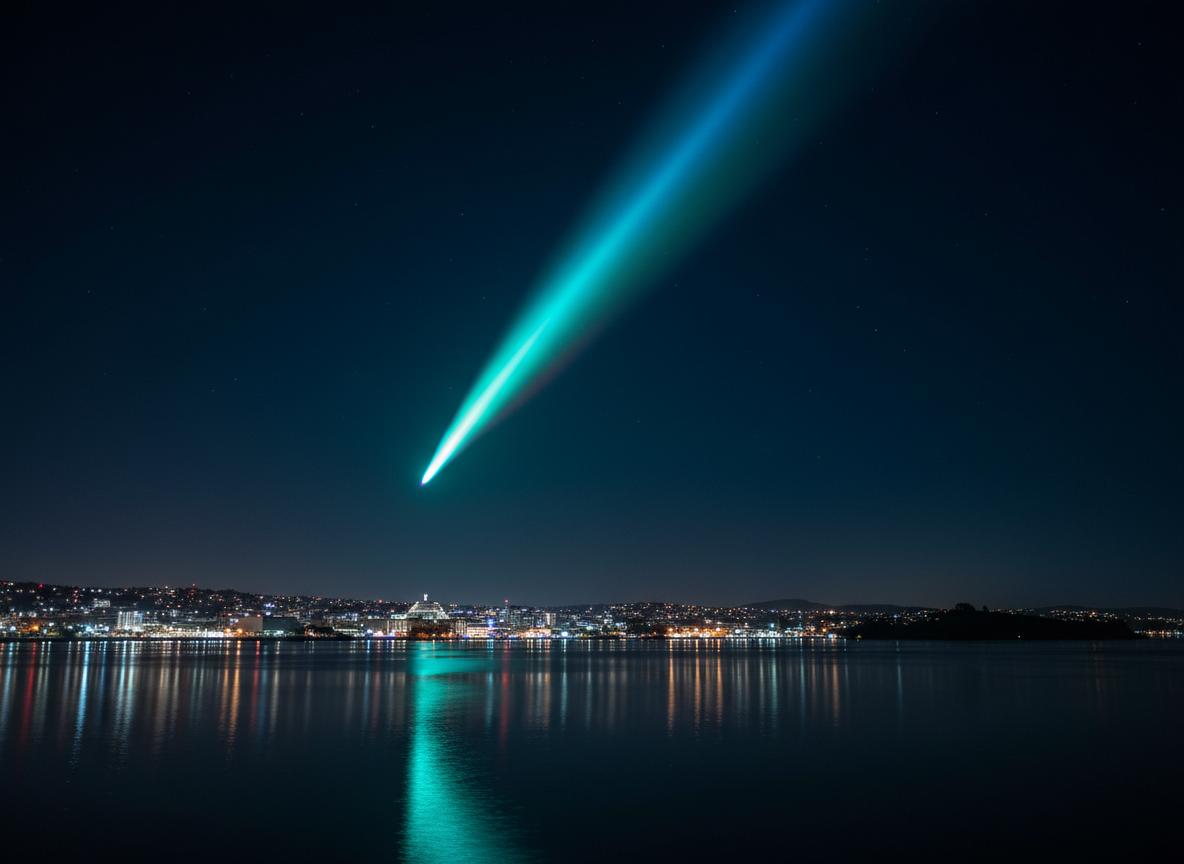
Stunning Blue Fireball Illuminates New Zealand Skies Amid Speculation of Rocket Debris Reentry
A brilliant blue green light streaked across the Wellington skyline on January 30, 2026, the event captivated onlookers and triggered immediate scientific debate. Cameras at local boating clubs captured the luminous event as it reflected off the harbor waters, this prompted questions about whether the object was a natural meteor or falling space junk.
Growing Frequency of Orbital Debris Complicates Identification of Celestial Objects
The sighting occurred during a period of heightened activity in Earth orbit, a massive Chinese rocket booster was scheduled for reentry the same night. This coincidence led to initial confusion among skywatchers, differentiating between meteors and artificial debris is becoming increasingly difficult as satellite launches multiply. New Zealand has a rich history of such events, the Mokoia meteorite fell in 1908 yet modern technology now allows for instant global speculation. The proximity of the rocket disposal to the visual spectacle highlights the challenges authorities face in monitoring the skies, experts must now rapidly analyze trajectory data to prevent false alarms regarding public safety.
Scientists Distinguish Natural Meteor From Chinese Rocket Booster Crash
Detailed visual analysis indicates the object displayed a sharp flare and brief duration, these are classic characteristics of a natural meteor rather than slow burning space debris. The International Meteor Organisation clarified the situation by tracking a separate event later that night, data from the US Space Force confirmed an 11 ton Chinese Zhuque 3 rocket booster crashed into the ocean south of the country. This massive piece of hardware reentered the atmosphere at approximately 1:39 AM, the crash occurred several hours after the fireball stunned Wellington residents.
Citizen Science Aids Tracking
High definition footage from boating club webcams proved essential for experts, the videos showed the light reflecting vividly off Wellington Harbour. No damage was reported from either the meteor or the rocket debris, the event highlights the value of networks like Fireballs Aotearoa which use cameras to hunt for meteorites. European trackers had initially projected the rocket might fall elsewhere, the final splashdown point occurred 800 kilometers southeast of the New Zealand coast.
Astronomers Leverage Digital Footage to Map Potential Meteorite Landing Sites
The abundance of high quality video allows researchers to triangulate the flight path with unprecedented precision, this could lead to the recovery of rare space rocks. Scientists use this data to study the origins of the solar system, the event also serves as a reminder of the crowded nature of near Earth orbit. Public interest in astronomy often spikes following such visible displays, local societies report increased engagement from residents hoping to find fragments.
Officials encourage anyone who finds unusual rocks to contact local museums for verification, the combination of citizen science and professional tracking ensures future celestial events are identified quickly.