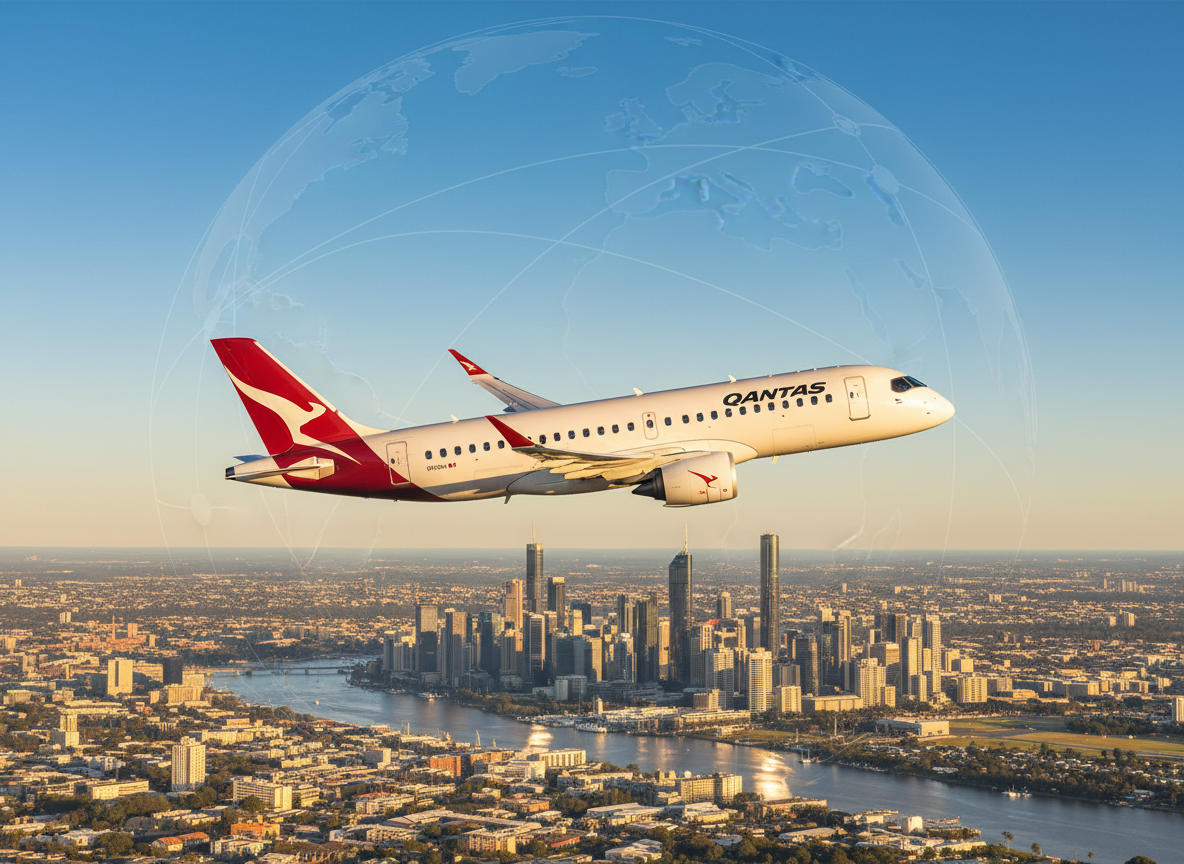
Qantas Debuts Efficient Airbus A220 on Key International Route to Brisbane
QantasLink officially launched its Airbus A220-300 on the Wellington to Brisbane route on February 2, 2026, this event marks the aircraft type's first international service for the airline group. The deployment replaces older fleet models, it introduces significant upgrades in fuel efficiency and passenger comfort for Trans-Tasman travelers.
Strategic Fleet Renewal Drives Modernization Efforts
This specific route upgrade represents a major step in the Qantas Group's historic fleet renewal program, the company has committed to purchasing over 200 new aircraft to modernize its operations. The Airbus A220 was selected to replace the aging Boeing 717 and Embraer 190 fleets, it bridges the gap between smaller regional jets and larger narrow-body planes. This strategic shift allows the airline to service routes with better economics while maintaining high frequency.
Competitor Air New Zealand currently operates on similar corridors using Airbus A320 family jets, the introduction of the A220 by Qantas intensifies market competition. The aircraft offers a range of over 6,000 kilometers, this capability provides QantasLink with the flexibility to open new direct routes that were previously economically unviable. The Wellington to Brisbane service acts as a proving ground for these international capabilities.
Advanced A220 Enters Service with Customer Upgrades
QantasLink now operates the A220-300 up to three times weekly on this specific sector, the flight schedule aims to support both business and leisure travel demands. The aircraft features a dual-class layout designed by David Caon, it carries a total of 137 passengers. The cabin configuration includes 10 Business Class seats and 127 Economy Class seats, this setup ensures premium options remain available on regional international flights.
Cabin Features and Environmental Gains
Passengers onboard will experience immediate tangible improvements compared to previous aircraft, the cabin boasts larger windows and spacious overhead bins. Every seat includes access to free high-speed Wi-Fi and personal device holders, travelers can also use USB A and C charging ports during the flight. These amenities target modern traveler expectations for connectivity and comfort.
Operational data highlights major environmental advancements for this aircraft type, the A220 burns 25 percent less fuel per seat than the planes it replaces. The engines produce a 50 percent smaller noise footprint, this reduction significantly benefits communities living near airport flight paths in Wellington and Brisbane.
Tourism and Local Economies to See Benefits
The increased efficiency of the A220 could lead to more competitive airfares, this dynamic typically stimulates tourism growth between Australia and New Zealand. Hotels and hospitality operators in both Brisbane and Wellington stand to gain from consistent visitor flow, business connections also strengthen with reliable and comfortable air links. The improved passenger experience places pressure on competitors to match service levels, this ultimately benefits the consumer.
Qantas expects to receive four additional A220 aircraft by the middle of 2026, the group plans to further expand its network connectivity across the region. Industry leaders view this rollout as a strong vote of confidence in the future of Trans-Tasman aviation.