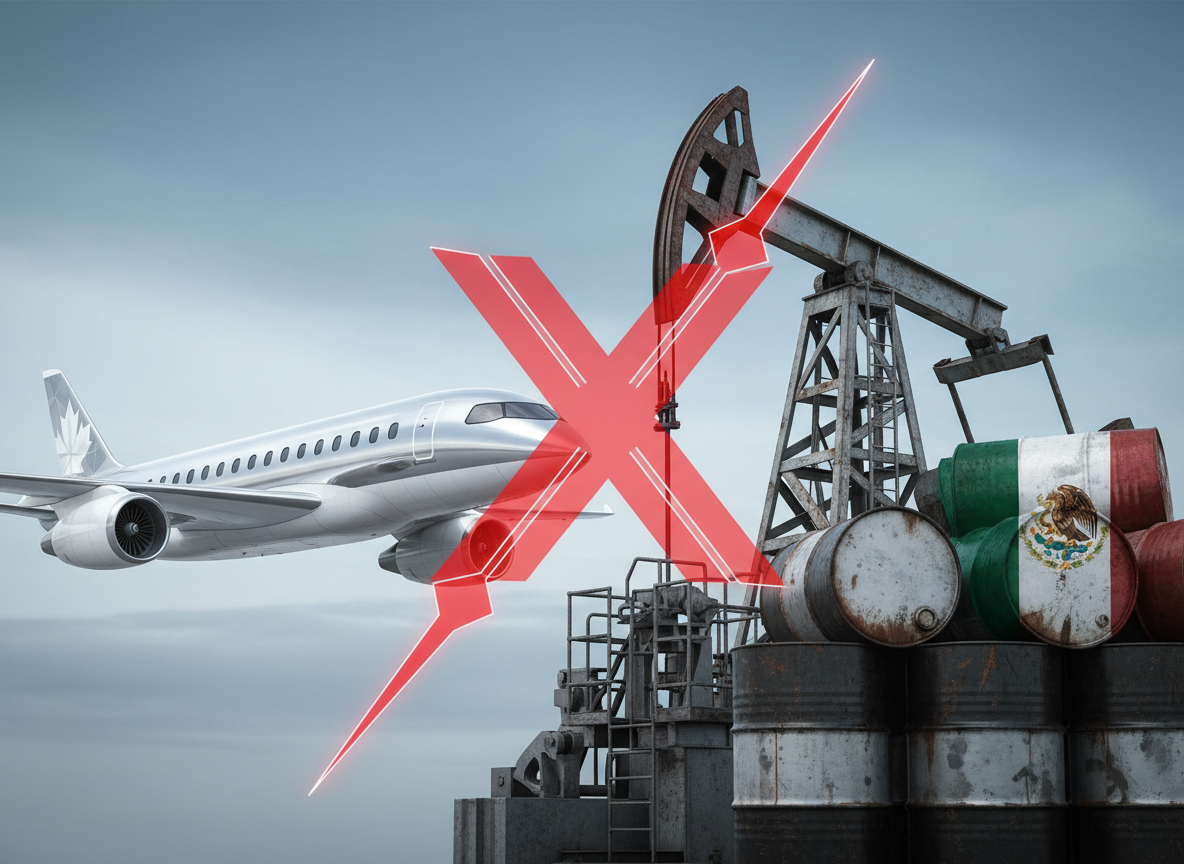
Trump Escalates Trade War With Threats to Tax Canadian Jets and Mexican Oil
President Trump renewed attacks on North American allies on Friday, he threatened 50% tariffs on Canadian aircraft and warned Mexico regarding oil shipments to Cuba. These aggressive moves aim to pressure neighbors over migration and foreign policy disputes while destabilizing regional markets.
Year of Trade Hostilities Sets Stage for New Threats
This latest escalation follows a tumultuous year for North American relations, the administration previously imposed levies on steel and aluminum in early 2025. Officials justified those initial measures by citing concerns over illegal immigration and drug trafficking, specifically the flow of fentanyl across the border. Tensions remain high as leaders look toward the mandatory review of the United States-Mexico-Canada Agreement later this year, Canadian Prime Minister Mark Carney has described recent rhetoric as political posturing. Markets remain volatile as investors fear a full-scale trade war could trigger a recession, the uncertainty has already impacted investment decisions across the continent.
Trump Targets Aviation Sector and Energy Exports
The President specifically singled out the aerospace industry during his recent remarks, he proposed a punitive 50% duty on Canadian aircraft imports. He further suggested the Federal Aviation Administration might decertify new jets from manufacturers like Bombardier, this retaliation allegedly stems from regulatory hurdles facing American-made Gulfstream jets in Canada. The administration also issued a stern warning regarding international alliances, officials threatened a massive 100% tariff on all Canadian goods if Ottawa pursues a trade pact with China. Current tariffs already impose a 35% rate on non-compliant goods, the President threatened to raise these levies by an additional 10% soon.
Mexico Faces Pressure Over Foreign Policy
The diplomatic pressure extends south of the border as well, the White House criticized Mexico for supplying oil to Cuba. This commerce conflicts with current U.S. foreign policy objectives, the administration indicated that continued energy shipments could trigger severe economic penalties. These threats expand the trade dispute beyond simple economics into geopolitical strategy, leaders in Mexico City are reportedly preparing retaliatory options to protect their sovereignty.
North American Supply Chains Face Disruption
Economists warn that these measures could fracture deeply integrated manufacturing networks, the automotive and aerospace sectors rely on parts crossing borders multiple times. Reducing this efficiency would likely increase prices for American consumers, experts estimate that prolonged trade barriers could stifle growth and reduce wages. Canada and Mexico represent the two largest export markets for the United States, this relationship supports over 17 million jobs across the continent. Major corporations like Volkswagen have already signaled they may halt factory expansions if the uncertainty continues.
The Bank of Canada Governor has flagged these policies as a major risk to economic stability, citing the potential for a new financial shock. Officials from all three nations are urging calm while preparing for difficult negotiations regarding the future of the continental trade pact.