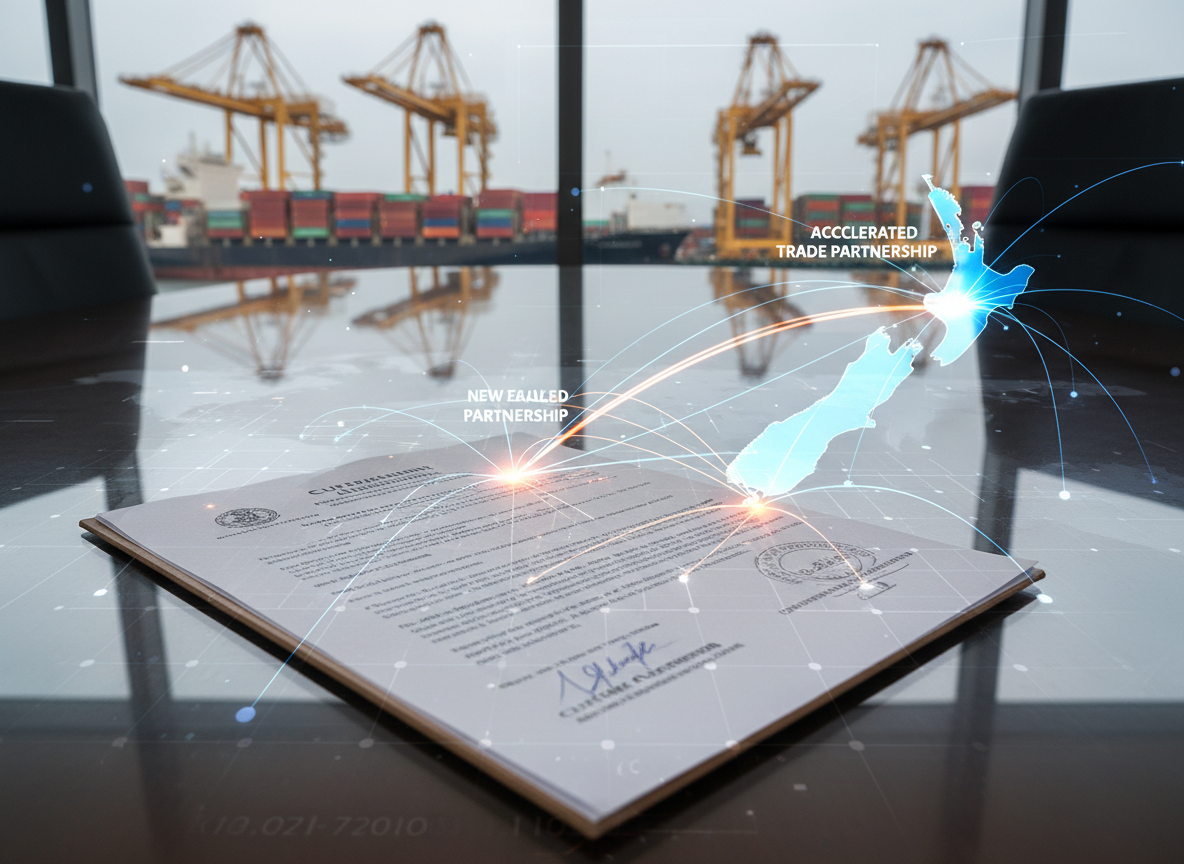
New Zealand Signs Strategic Customs Pact with Saudi Arabia to Accelerate Trade Flows
Senior officials from New Zealand and Saudi Arabia formalized a cooperation agreement in Riyadh on Thursday to streamline border processing and share intelligence, the move aims to bolster supply chain security ahead of a major regional free trade deal.
Surging Export Volumes Drive Need for Modernized Border Frameworks
The economic relationship between Wellington and Riyadh has expanded dramatically over the last five years, bilateral exports from New Zealand more than doubled from $620 million in 2021 to $1.35 billion in 2025. This rapid growth has placed increased pressure on customs infrastructure, requiring more sophisticated management systems to handle the rising volume of goods. Saudi Arabia is currently New Zealand’s 22nd largest trading partner globally, the nation serves as a critical destination for primary sector exports including dairy and meat products.
Diplomatic efforts to secure a broader trade framework have intensified recently, the two nations concluded negotiations for the Gulf Cooperation Council (GCC) Free Trade Agreement in 2025. This newly signed customs memorandum serves as a foundational operational layer, it ensures that technical border procedures are aligned before the wider tariff-reduction treaty comes into full force.
Riyadh Ceremony Establishes Direct Channels for Intelligence Sharing
New Zealand Customs Comptroller Christine Stevenson and Suhail Bin Muhammed Abanmi of Saudi Arabia’s Zakat, Customs and Tax Authority (ZATCA) executed the Memorandum of Cooperation to create a permanent platform for dialogue. The agreement mandates the direct exchange of information regarding the movement of people and goods, this capability allows both agencies to identify potential risks before shipments arrive at their respective borders. Stevenson noted that the partnership supports broader government objectives in the Middle East, it aligns specifically with strategies to enhance travel security and economic engagement.
The operational details focus on two core pillars, trade facilitation and law enforcement cooperation. By standardizing procedures and opening communication lines, the agencies aim to detect known or suspected customs offenses more effectively. This collaboration targets transnational organized crime networks that often exploit gaps between different national jurisdictions, the agreement provides the legal mechanism necessary to share sensitive data regarding illicit activities.
Primary Industries and Enforcement Agencies Set to Reap Benefits
Exporters of perishable goods stand to gain significant advantages from the new protocols, the agreement promises to reduce administrative friction and clearance times for New Zealand’s $1.35 billion export market. Faster processing is critical for the dairy and meat sectors where product freshness correlates directly with value, businesses can expect more predictable supply chains as the agencies harmonize their inspection standards. Security agencies will simultaneously benefit from enhanced oversight, the shared intelligence will help intercept illegal trafficking while expediting legitimate commerce.
Authorities anticipate the finalized NZ-GCC Free Trade Agreement will be signed shortly, this customs pact ensures the operational groundwork is ready to support the expected increase in tariff-free trade volume.