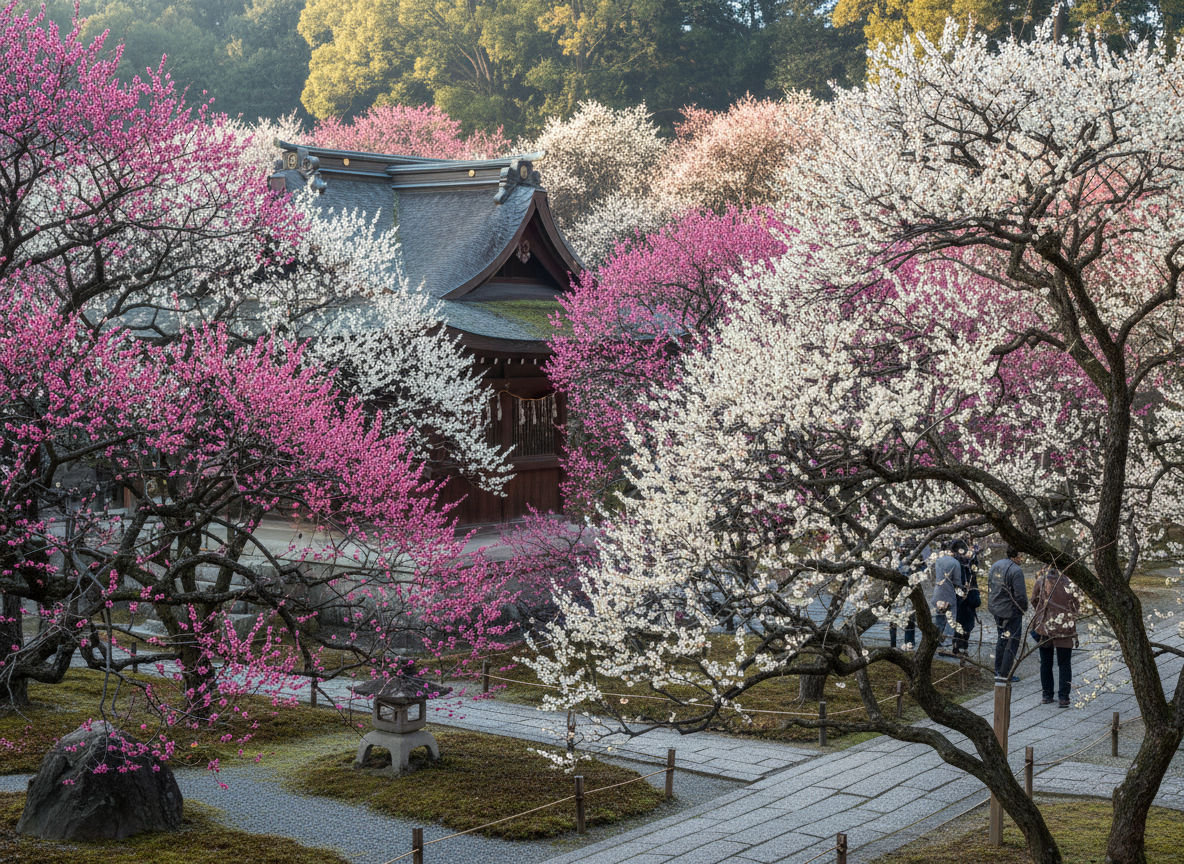
Kyoto Shrine Gardens Reach Peak Color as Visitors Celebrate Ancient Early Spring Tradition
Early spring has officially arrived in Kyoto, thousands of visitors are currently flocking to the historic Kitano Tenmangu Shrine to witness the annual blooming of plum blossoms. The delicate flowers known as ume are painting the shrine grounds in vivid shades of white and deep pink, this natural spectacle serves as a cherished harbinger of warmer days ahead.
Ancient Customs and Scholarly Ties Deepen Significance
The tradition of admiring plum blossoms traces its roots back to the Nara period, it predates the more internationally famous cherry blossom viewings by several centuries. These resilient flowers hold profound cultural meaning, they symbolize perseverance and hope by blooming bravely during the lingering winter chill. The connection to academia is particularly strong at this specific location, the shrine enshrines Sugawara no Michizane, he was a revered scholar who loved these blooms deeply. Students often visit the grounds during this season to pray for academic success, they view the blossoming trees as a sign of protection and inner strength.
Shrine Grounds Host Thousands of Vibrant Varieties
Visitors wandering through the expansive gardens are greeted by an impressive collection of flora, the shrine boasts between 1,500 and 2,000 trees representing over 50 distinct varieties. The viewing season typically runs from late January through March, the current display features a breathtaking canopy of reds and pinks that creates a serene atmosphere for photographers and worshippers alike. The flowers are blooming in defiance of the cold, this resilience is a key reason for their popularity among Japanese poets and artists throughout history.
Upcoming Festival Adds Cultural Depth
The festivities will culminate later this month, the annual Baikasai or Plum Blossom Festival is scheduled for February 25th to honor the death anniversary of the enshrined deity. This upcoming event offers more than just visual splendor, a large outdoor tea ceremony known as nodate will take place on the grounds. Geiko and maiko from the nearby Kamishichiken district will serve green tea to guests, this adds a layer of authentic cultural performance to the botanical showcase.
Tourism Industry Sees Vital Early Season Revenue
This influx of domestic and international travelers provides a critical economic bridge, it fills the typically quiet gap between the New Year holidays and the chaotic cherry blossom peak. Local businesses including hotels and souvenir shops benefit significantly from the steady stream of nature enthusiasts, the extended tourism window helps distribute revenue more evenly throughout the first quarter. This specifically appeals to those seeking a quieter experience, the plum blossom crowds are generally more contemplative than the rowdy parties associated with later spring events.
Shrine officials and tourism boards are closely monitoring climate patterns to predict future bloom times, they aim to ensure this tranquil tradition remains accessible and sustainable for generations to come.