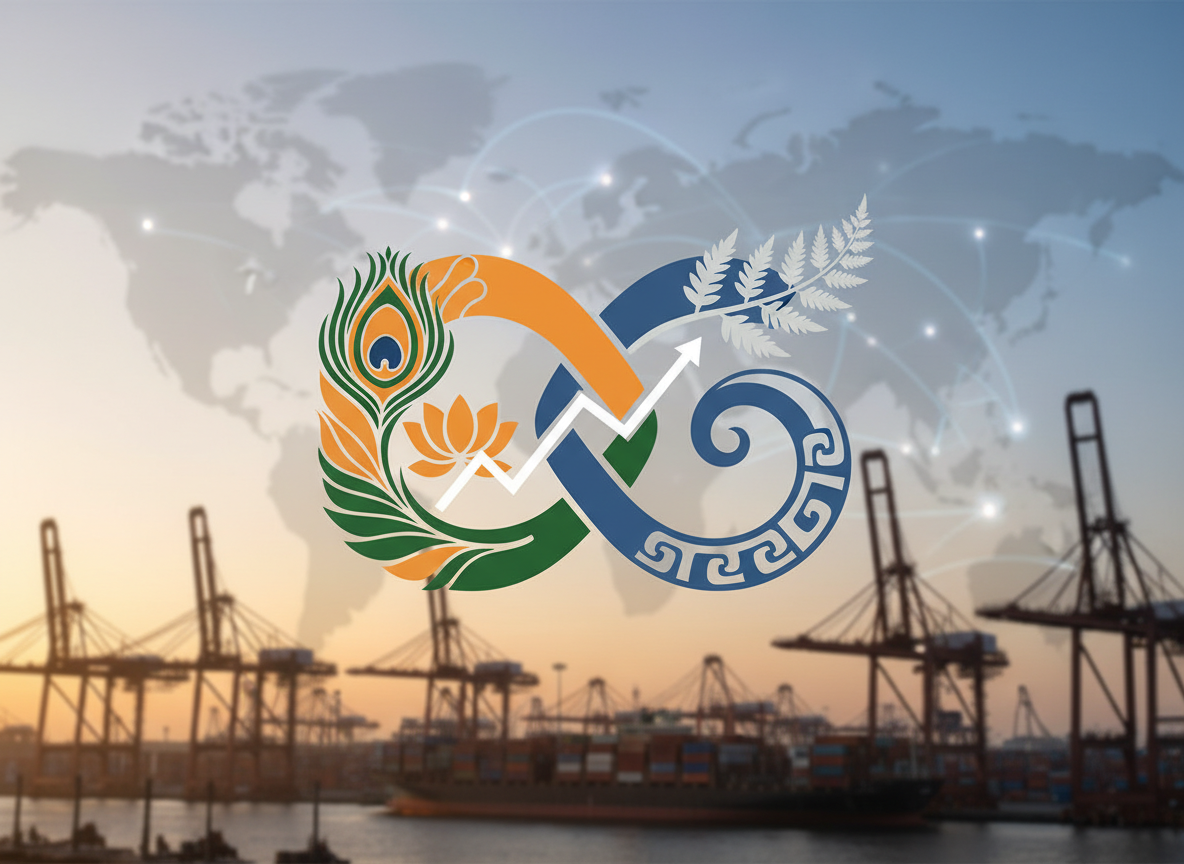
India and New Zealand Finalize Trade Pact Targeting Five Billion in Annual Commerce
Officials from India and New Zealand successfully concluded negotiations for a comprehensive trade agreement on December 22. This milestone deal aims to double bilateral commerce to $5 billion over five years, it notably secures market access for key industries while protecting sensitive agricultural sectors.
Decades of Diplomatic Relations Lead to Economic Breakthrough
The two nations have maintained cordial ties since 1952, diplomatic efforts to secure a formal trade pact previously stalled due to disagreements over agricultural protections. New Zealand has long viewed India as a priority partner in its diversification strategy, the government renewed its focus with the "Opening Doors to India" policy years ago. Negotiations gained fresh momentum in March 2025 following a visit by Prime Minister Christopher Luxon, this political will allowed teams to finalize the complex framework in just nine months.
Agreement Eliminates Tariffs on Billions in Bilateral Goods
The pact introduces sweeping changes to the import landscape for both economies. New Zealand agreed to remove duties on 100% of Indian exports immediately upon implementation, this move benefits manufacturers of pharmaceuticals, textiles, and engineering goods. India reciprocated by offering market access on over 70% of tariff lines, this covers nearly 95% of the current trade value between the partners.
Specific Sectors Gain New Advantages
New Zealand exporters of apples, kiwi fruit, and sheep meat will see tariffs vanish or drop significantly. India maintained strict protections for its dairy industry by excluding milk products from the deal, this decision addresses persistent concerns from domestic farmers. Beyond goods, the free trade agreement establishes a working holiday scheme for 1,000 young Indians and codifies work rights for students. Furthermore, New Zealand pledged to help drive $20 billion in private sector investment into Indian industries over the next decade and a half.
Exporters and Students Set to Benefit from Reduced Barriers
Businesses in both nations will face lower costs and simplified regulations under the new rules. Indian students in New Zealand gain security through guaranteed work hours, meanwhile exporters of horticultural products gain a competitive edge in the vast Indian marketplace. This agreement also serves as a strategic diversification for India, it reduces reliance on traditional partners and opens a gateway to the broader Pacific region.
Leaders expect to formally sign the treaty in the first half of 2026. Government agencies will now focus on ratification processes to ensure the tariff reductions take effect as scheduled.