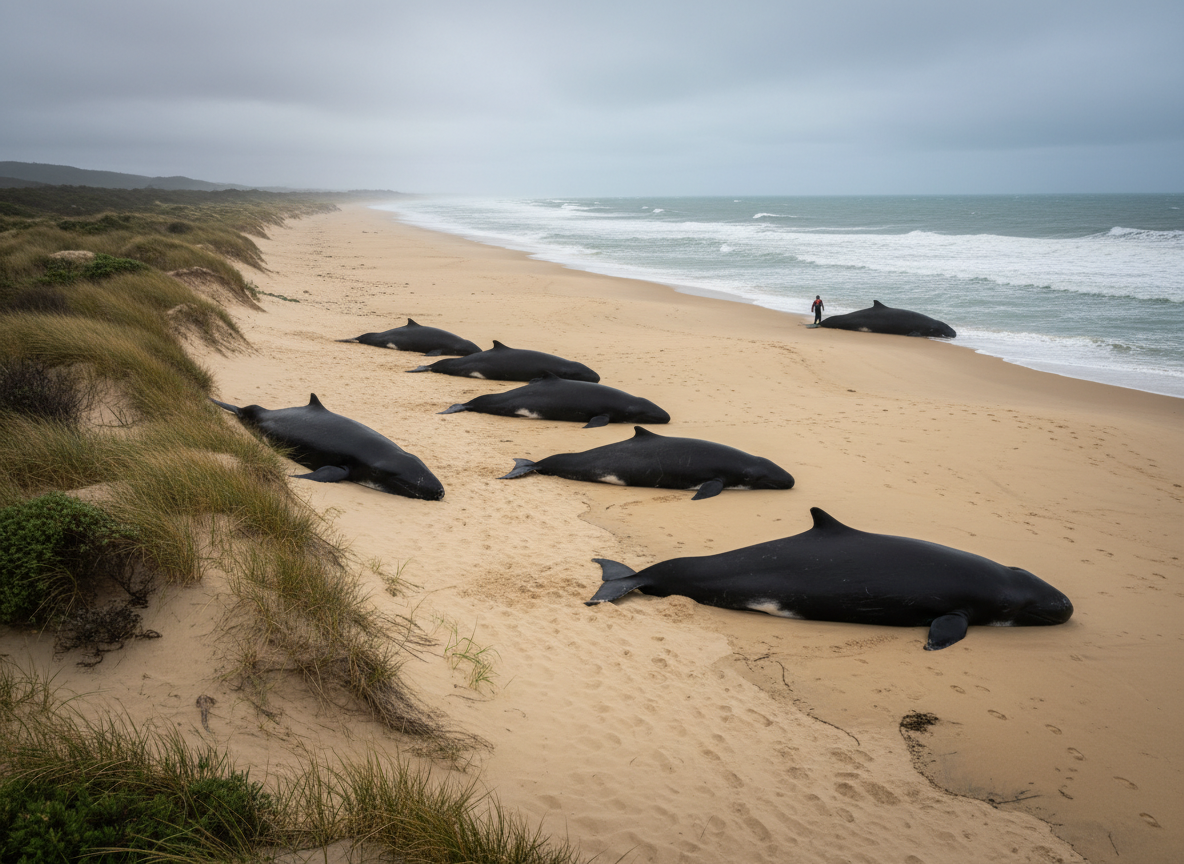
Conservationists Mourn Loss of Six Whales Following Mass Stranding on Remote New Zealand Beach
Six marine mammals perished this week after becoming stranded on a remote stretch of coastline in New Zealand, conservation officials confirmed the loss occurred despite urgent efforts by volunteers and experts to refloat the animals at the notorious geographical trap.
Geography of Farewell Spit Creates Natural Hazard for Marine Life
New Zealand is recognized globally as a hotspot for these tragic events, the nation has recorded more than 5,000 strandings since records began in 1840. The specific topography of the region creates a deadly environment for cetaceans, the gently sloping sandy beaches of areas like Farewell Spit reflect sound poorly which effectively blinds the echolocation systems whales rely on for navigation. This acoustic confusion causes them to swim into shallow waters where the receding tide traps them, strong social bonds often lead entire pods to follow a distressed leader into danger which results in mass casualty events. Māori communities view these animals as taonga or treasured possessions, they have maintained a deep cultural connection to the whales for centuries and regard strandings as significant spiritual occurrences.
Department of Conservation Confirms Fatalities Despite Rescue Attempts
The Department of Conservation (DOC) led the response to the isolated beach, they worked alongside Project Jonah volunteers to assess the situation immediately upon receiving reports of the distress. Six whales were confirmed dead at the scene, the remote location hampered immediate rescue efforts which are critical in the first few hours of a stranding event. Experts identified the animals as pilot whales, this species is the most common victim of mass strandings in the region due to their highly cohesive herding instincts that keep the pod together even in peril.
Local Iwi Māori representatives attended the site to perform cultural protocols, they ensured the treatment of the animals adhered to strict tikanga customs. Personnel focused on securing the site and planning for the disposal of the carcasses, the team prioritized health and safety while managing the logistical challenges of the remote terrain. Officials noted that while the loss of six lives is tragic, the swift reporting allowed responders to verify that no other pod members were currently in immediate danger along the adjacent coastline.
Scientists Urge Expanded Protection Measures for Marine Habitats
This latest loss highlights the urgent need for expanded marine protected areas, conservationists argue that current zones cover only a fraction of critical habitats required for the long term survival of these species. Researchers will examine the carcasses to gather data on whale health and diet, these findings help scientists understand the complex factors driving strandings including rising ocean temperatures and illness. Human activities like shipping noise and pollution continue to pose threats to marine life, experts warn that reducing these anthropogenic stressors is vital for mitigating future risks to local whale populations.
Officials continue to monitor the coastline for signs of other pod members, they urge the public to report any sightings of distressed marine life immediately to local authorities to ensure rapid response times.