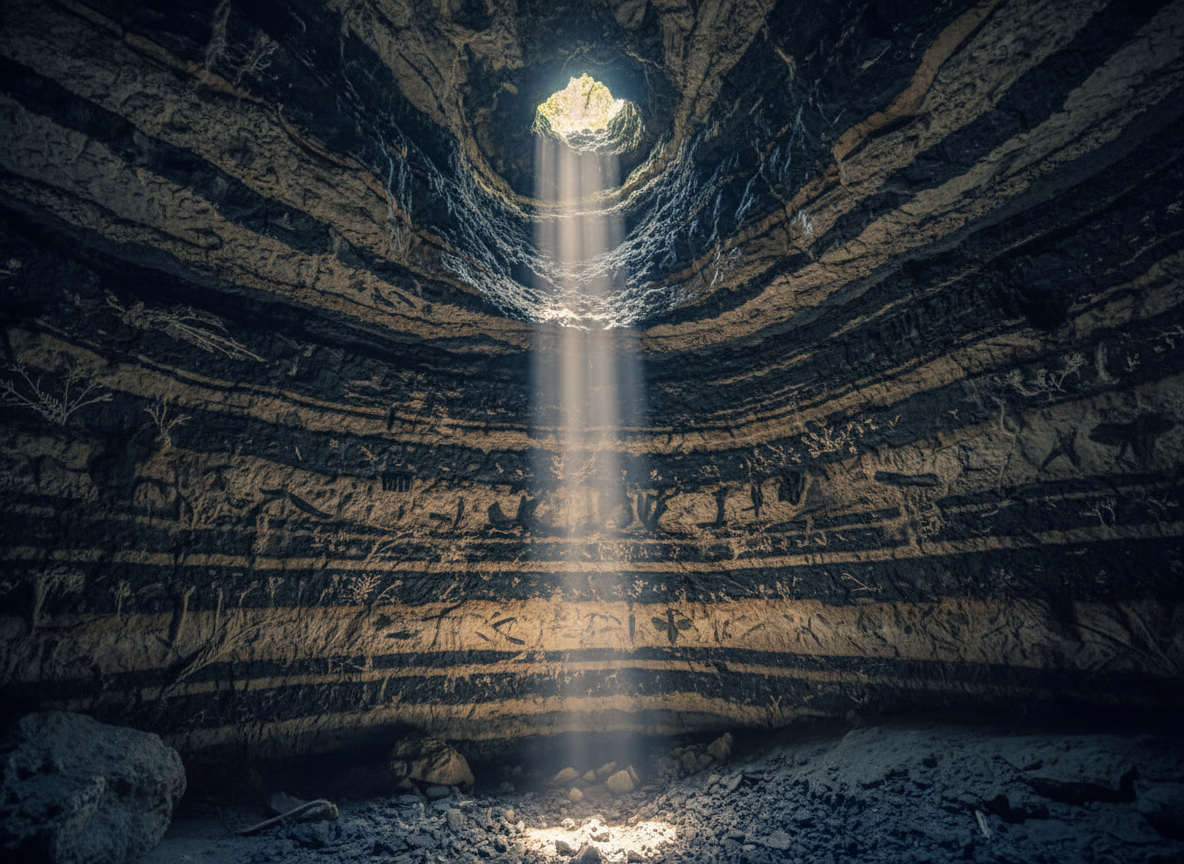
Volcanic Ash Preserves Million Year Old Ecosystem Buried Deep Within New Zealand Cave
Paleontologists have unearthed a treasure trove of fossils in New Zealand, this discovery offers a rare glimpse into a biological lost world from one million years ago. The find occurred near Waitomo on the North Island, it challenges existing theories about the evolution of the region's unique wildlife.
Geological History of Aotearoa Created Unique Conditions
New Zealand has long been celebrated for its distinct evolutionary path, the island nation developed a bird dominated ecosystem during millions of years of isolation. Scientists previously relied on fossils from the St Bathans site to understand ancient life, those remains date back roughly 16 to 19 million years. A significant gap existed in the timeline between those ancient days and the arrival of humans, this left researchers guessing about how modern species evolved. The Waitomo region is famous for its extensive limestone cave systems, these underground networks have now proven to be time capsules that bridge this critical historical divide.
Excavation of Moa Eggshell Cave Yields Rare Species
The excavation at Moa Eggshell Cave has yielded the largest collection of Early Pleistocene fossils ever found in the country, the team identified at least 12 species of birds and four distinct frog species. A standout discovery includes a newly named parrot species called Strigops insulaborealis, this bird is an ancient relative of the famous flightless kakapo. Preliminary analysis suggests this ancestor may have been capable of flight, its leg bones are weaker than those of its heavy modern descendants.
Lead author Trevor Worthy from Flinders University directed the study, he worked alongside experts to date the site using layers of volcanic ash. These sediment layers confirm the fossils range from 1 million to 1.55 million years old, they effectively froze the ecosystem in time during a period of intense volcanic activity. The findings suggest the landscape underwent rapid transformations, this forced species to adapt or vanish entirely.
Natural Climate Shifts Drove Early Extinctions
This study fundamentally alters the understanding of biological turnover in the region, it proves that significant extinctions occurred long before humans set foot on the islands. The data indicates that natural climate fluctuations and volcanic eruptions drove dramatic changes in the forest landscape, these events caused up to half of the local species to disappear naturally. Conservationists can now distinguish better between natural evolutionary losses and damage caused by human settlement, this provides a vital baseline for modern environmental efforts.
Scientists intend to explore deeper sections of the Waitomo cave system, they hope to uncover further evidence of how these unique creatures adapted to a changing world.