US President Pursues Nuclear Agreement While Deploying Armada to Persian Gulf
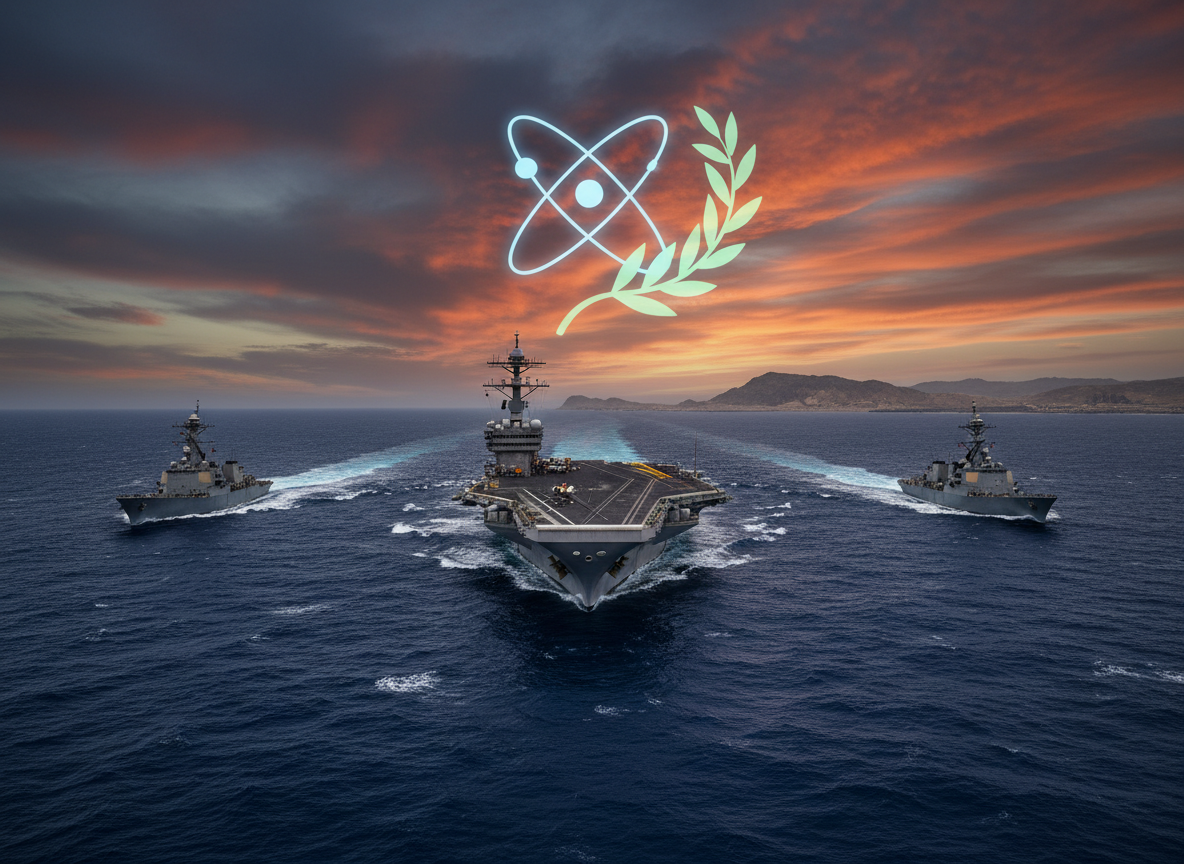
President Donald Trump expressed optimism on Sunday regarding a potential nuclear accord with Tehran, he urged Iranian leaders to negotiate a fair agreement to avoid conflict. This diplomatic overture coincides with the deployment of the USS Abraham Lincoln carrier strike group to the region as tensions reach critical levels.
Decades of Mistrust Complicate New Diplomatic Overtures
The current standoff follows years of deteriorating relations initiated by the US withdrawal from the Joint Comprehensive Plan of Action in 2018, that decision reinstated crippling sanctions under a "maximum pressure" campaign. Recent months have seen a dangerous escalation, the International Atomic Energy Agency reported in May 2025 that Tehran had stockpiled record amounts of military-grade uranium. Regional stability suffered further after Israel launched strikes on Iranian nuclear facilities last June, this prompted Iran to suspend formal talks indefinitely. Trust remains scarce due to historical grievances dating back to the 1953 coup and the 1979 revolution.
Satellite Imagery Shows Activity at Nuclear Sites Amidst Threats
While President Trump calls for a "fair and equitable deal," satellite data reveals renewed construction at Iranian nuclear facilities in Isfahan and Natanz. These sites were previously damaged in bombing campaigns, observers fear the new roofing structures are intended to obscure ongoing work from international inspectors. Iranian Foreign Minister Abbas Araghchi confirmed readiness for dialogue, however he firmly stated that negotiations would exclude discussions on defense capabilities or missile programs. The administration insists that any agreement must preclude nuclear weapons, yet Tehran maintains its right to peaceful nuclear technology.
Military Posturing Intensifies on Both Sides
Rhetoric has sharpened alongside the diplomacy, Supreme Leader Ayatollah Ali Khamenei warned that any American attack would spark a "regional war." The Pentagon has bolstered its presence with guided-missile destroyers and the USS Abraham Lincoln, officials plan to conduct multi-day air exercises to demonstrate operational readiness. Tehran responded by designating European Union armies as terrorist groups, this retaliation followed the EU's decision to blacklist the Islamic Revolutionary Guard Corps. Internal tensions also complicate the picture, the Iranian regime continues to face domestic protests that leadership has characterized as an attempted coup.
Global Energy Markets Brace for Potential Conflict
The prospect of military confrontation in the Strait of Hormuz threatens to disrupt a vital global oil artery, energy analysts warn that any closure of this shipping lane would send crude prices soaring. Gulf Cooperation Council nations including Saudi Arabia are scrambling to de-escalate the situation, they fear becoming collateral damage in a crossfire between Washington and Tehran. Humanitarian organizations also worry that renewed conflict could worsen conditions for civilians already impacted by sanctions and domestic unrest.
Diplomatic channels remain active through intermediaries despite the stalled direct talks, officials on both sides face a narrow window to prevent accidental war.