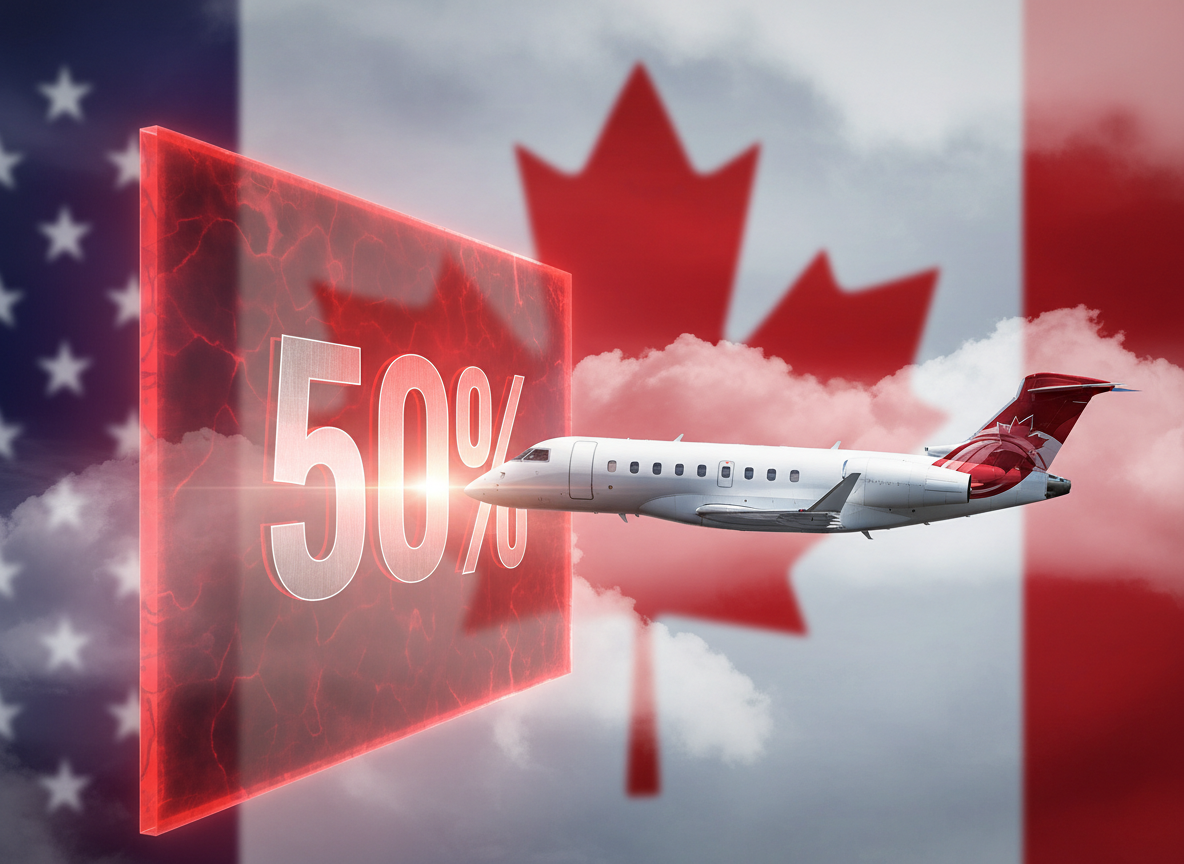
Trump Threatens 50% Tariff on Canadian Jets Amid Dispute Over Certification
Former President Donald Trump escalated trade tensions on Thursday by threatening a 50% tariff on Canadian aircraft sold in the United States. The Republican candidate also vowed to decertify Bombardier business jets, citing Canada's alleged refusal to certify American-made Gulfstream aircraft as the primary motivation for these punitive measures.
Aerospace Dispute Reignites Longstanding Trade Tensions
This latest ultimatum marks a significant escalation in cross-border relations, reminiscent of the 2017 conflict involving Bombardier and Boeing. During that period, the U.S. Commerce Department attempted to impose heavy duties on CSeries jets, though regulators ultimately blocked the move. Trump’s current stance follows a warning issued just days prior, where he suggested a 100% tariff on Canadian goods if Ottawa pursued a trade agreement with China. These successive threats highlight a growing friction between the two nations, shifting focus from broad economic policy to specific industrial grievances.
Proposed Decertification Targets Specific Business Jets
The former president used social media to deliver his specific demands on Thursday, stating he would implement a 50% levy on all aircraft imports from the northern neighbor. He explicitly targeted the Bombardier Global Express, a popular line of long-range business jets, warning that he intends to "decertify" these aircraft immediately. Trump claimed this action serves as direct retaliation for regulatory hurdles facing Gulfstream Aerospace, a manufacturer based in Savannah, Georgia, alleging that Canada has unfairly blocked their certification.
Industry Response and Verification
Montreal-based Bombardier quickly responded to the aggressive rhetoric, asserting that its aircraft fully meet Federal Aviation Administration standards. The company emphasized its desire for a swift diplomatic resolution to prevent disruptions for American operators. Industry data suggests that approximately 150 Global Express jets flown by 115 different operators are currently registered in the United States, meaning any retroactive decertification could ground a significant portion of the private aviation fleet.
American Operators Face Potential Service Disruptions
If enacted, these measures would cause immediate turmoil for U.S. companies that rely on Canadian aviation technology. A 50% price hike renders new imports uncompetitive, while the threat of decertification creates legal uncertainty for current owners. Trade experts warn that such unilateral moves could violate international aviation agreements, likely prompting Ottawa to file formal complaints or issue retaliatory tariffs against American exports.
The situation remains fluid as diplomatic channels assess the severity of the threat. Industry leaders now await clarification on whether these proposed penalties will become formal policy or serve as leverage for future negotiations.