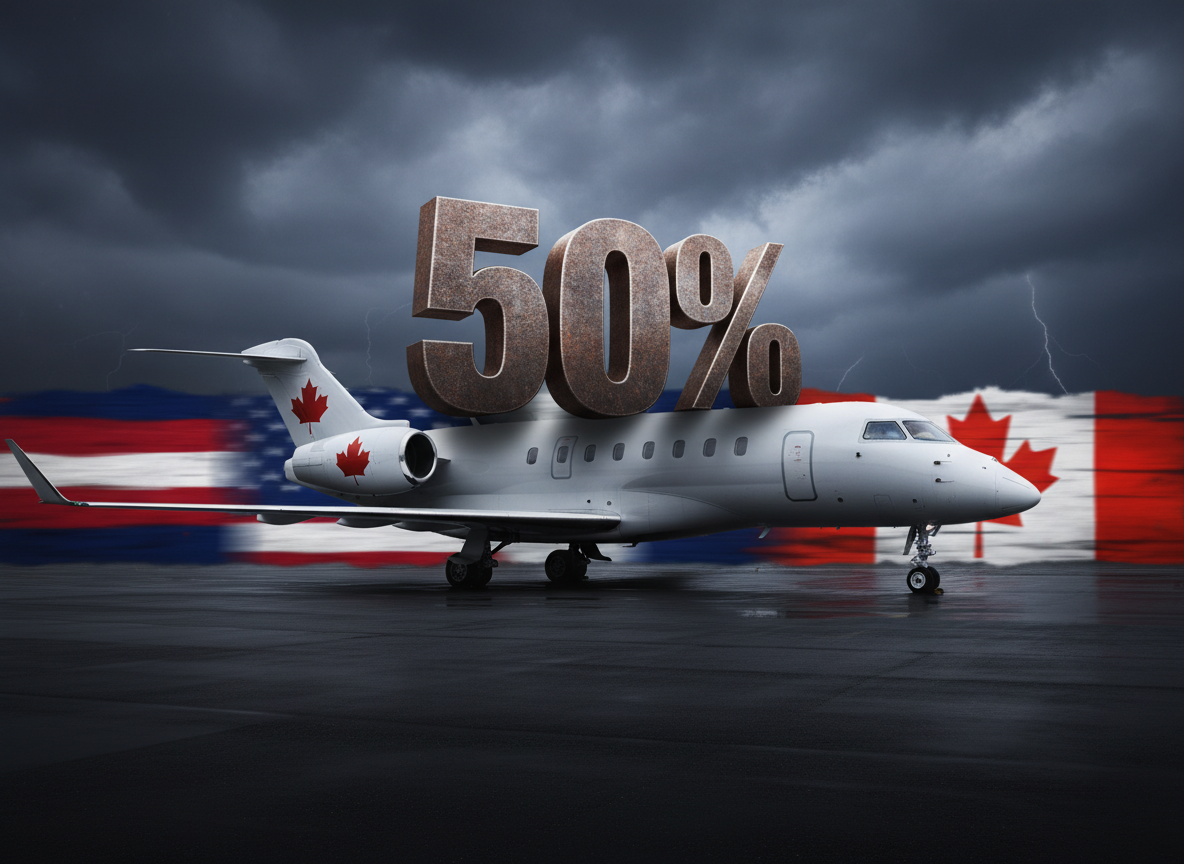
Trump Threatens 50 Percent Tariffs on Canadian Aircraft Amid Escalating Gulfstream Dispute
President Donald Trump announced severe trade penalties against Canada on Thursday via social media, citing regulatory disputes over Gulfstream jets. The proposed measures include a 50 percent tariff on aircraft made in Canada and potential decertification of Bombardier planes, sparking immediate concern across the North American aerospace sector.
Recurring Trade Disputes Strain Transnational Aviation Ties
This latest escalation follows a pattern of contentious trade rhetoric targeting the aerospace industry, similar friction occurred in 2017 regarding the CSeries jet, highlighting the fragile nature of bilateral economic relations. The current dispute centers on claims that Canada has wrongfully refused to certify specific Gulfstream business jets, a move Trump labeled as illegal obstruction. Aviation regulations typically rely on technical safety standards rather than political pressure, making this threat highly unusual in the context of international air travel protocols, the integrated nature of manufacturing means instability here affects suppliers on both sides of the border.
Social Media Ultimatum Targets Bombardier and Certification Process
The President used his Truth Social platform to deliver the ultimatum, explicitly demanding immediate certification for Gulfstream models 500 through 800. Failure to comply would result in a massive 50 percent levy on all aircraft manufactured in Canada sold in the United States, along with the decertification of the Global Express fleet owned by Bombardier. Officials clarified that these threats would apply to new inventory rather than planes currently in service, yet the announcement immediately shook investor confidence.
Industry and Government Response
Bombardier quickly responded by emphasizing its substantial American footprint, noting it employs over 3,000 workers at nine United States facilities. The company reaffirmed that its aircraft meet all Federal Aviation Administration standards, dismissing the political nature of the attack. Foreign Affairs Minister Anita Anand defended the regulatory institutions of Canada as stable and rigorous, she vowed to protect the sector. Experts question the legality of unilateral decertification, such powers traditionally reside with independent safety agencies based on technical merit rather than executive decree.
Regional Airlines and Supply Chains Face Potential Disruption
A 50 percent tariff would devastate the aviation exports of Canada, yet the consequences would also ripple through the American economy. Regional airlines rely heavily on jets built in Canada for daily operations, meaning broad decertification could ground thousands of flights. The United States military utilizes modified versions of these aircraft, enforcement could inadvertently compromise national defense capabilities while hurting American suppliers who contribute to the production line.
Officials from both nations are now engaging in diplomatic talks to prevent widespread economic fallout. Industry leaders hope for a negotiated resolution that respects established safety protocols before the proposed penalties take effect.