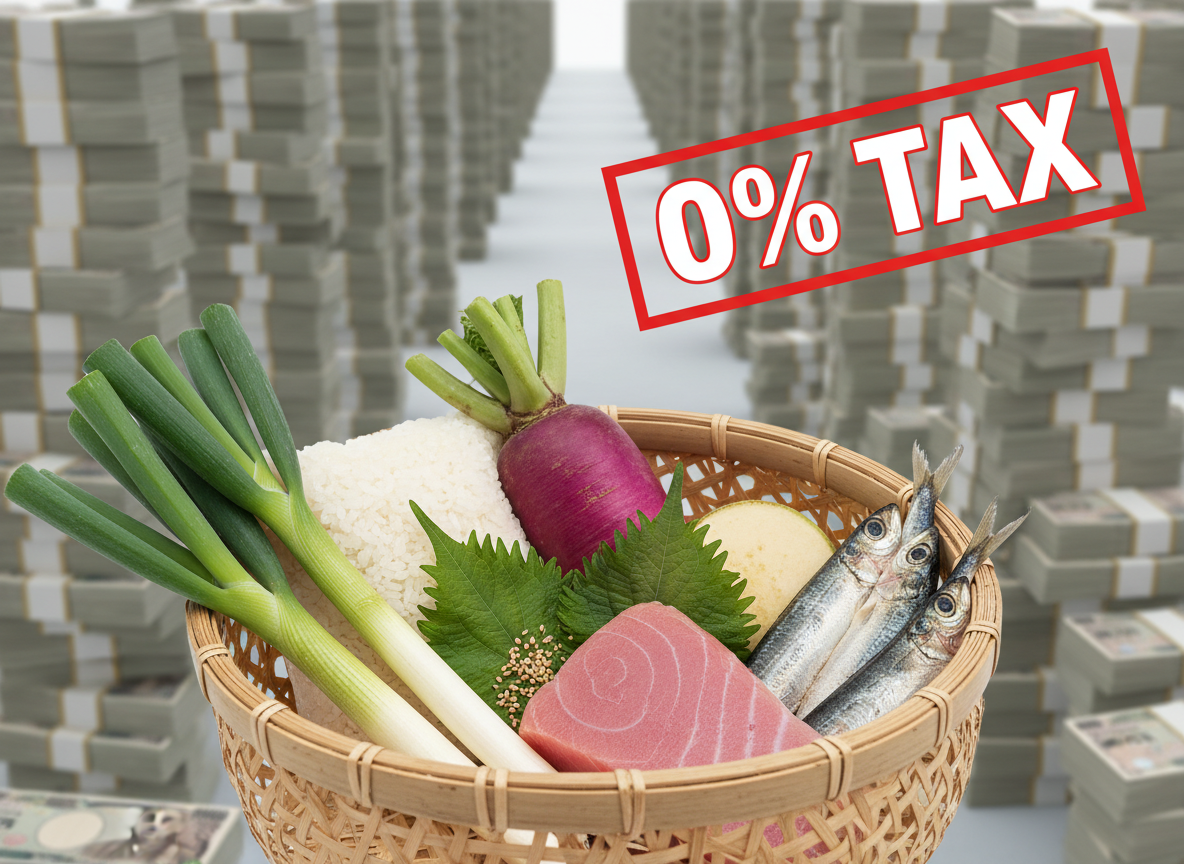
Takaichi Pledges Zero Food Tax Despite Massive National Debt Concerns
Prime Minister Sanae Takaichi and opposition leaders are promising significant tax cuts ahead of the February Lower House election. The central proposal involves removing the 8 percent consumption levy on food items to help consumers, but economists warn this move could destabilize the economy by widening the budget deficit.
Decades of Borrowing Create Economic Strain
Japan holds the highest debt load among advanced nations at roughly 230 percent of gross domestic product. This financial burden stems from the post-bubble era of the 1990s and a rapidly aging population that requires high social security spending. The government previously raised taxes in 2014 and 2019 to attempt to balance the books, yet deep deficits persist today. Now, the upcoming election shifts political focus back to spending rather than saving, this pivot occurs just as interest rates begin to rise after years of staying near zero. The combination of high debt and increasing borrowing costs creates a precarious environment for new fiscal experiments.
Parties Propose Five Trillion Yen Tax Break
The ruling Liberal Democratic Party (LDP) and its rivals are competing for votes with bold promises to eliminate the 8 percent consumption tax on groceries. Prime Minister Takaichi supports a complete exemption for store-bought food items, a move heavily influenced by coalition partner Japan Innovation Party. This policy would cost the government an estimated 5 trillion yen, or 33 billion dollars, every single year. Takaichi insists she can fund this massive revenue gap by reviewing existing subsidies and utilizing special tax measures, she explicitly stated that issuing new government bonds remains a last resort.
Conversely, opposition groups offer different solutions to attract voters. The Democratic Party for the People suggests holding the tax at 5 percent until wages grow consistently by 2 percent. Meanwhile, the Japanese Communist Party pushes for an immediate drop to 5 percent with a goal of total abolition in the future. These varying proposals highlight how central the cost of living has become in the political debate.
Small Businesses Face Administrative Hurdles
Restaurant owners and farmers worry about the complexity and fairness of these new tax rules. A zero-tax rate on store-bought food creates a significant price gap compared to dining out, which would still face a 10 percent levy. This disparity could hurt the restaurant industry as consumers choose cheaper takeout options to save money. Furthermore, the Bank of Japan warns that loose fiscal policy might force them to raise interest rates faster, this would drastically increase the cost of servicing the national debt.
Voters will decide the country's fiscal path at the polls this February. Financial experts urge officials to consider long-term stability over short-term popularity, noting that future generations will bear the cost of current debt.