Stellantis Market Share Shrinks to Six Percent Following Decade of Sales Declines
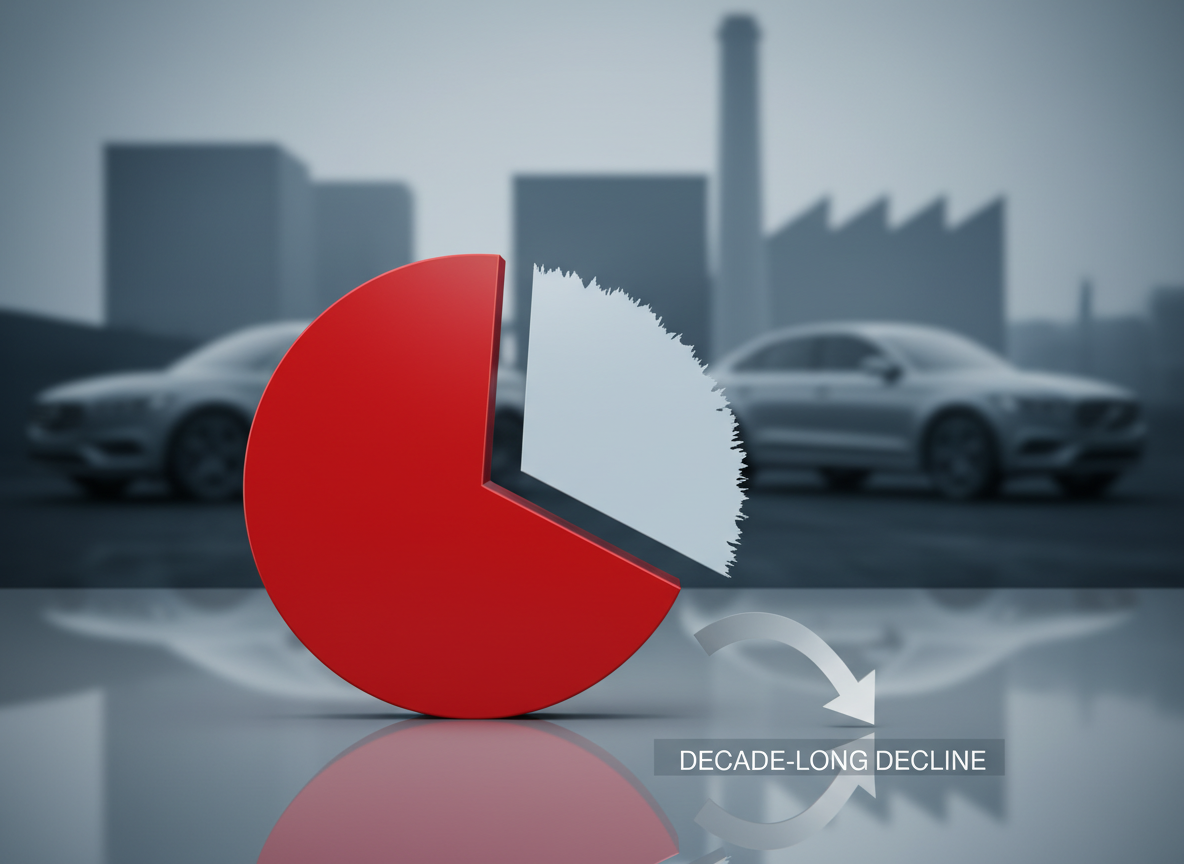
Stellantis faces a critical juncture in the Canadian automotive sector as new data reveals a steep downward trajectory for the manufacturing giant. The automaker now holds just 6 percent of the market, a significant drop from the 15.4 percent share recorded ten years ago, this signals deep structural challenges for the parent company of Jeep and Chrysler.
Ten Years of Market Erosion Challenges Automaker
The decline predates the 2021 merger between Fiat Chrysler Automobiles and PSA Group, the company formerly known as FCA Canada once held a dominant position in the local industry. This erosion of influence occurred steadily as competitors like Toyota and Kia expanded their footprints, the shift highlights a disconnect between the automaker's product strategy and evolving Canadian consumer needs. Current figures represent a historic low for the conglomerate, the group previously relied heavily on volume sellers that have since been discontinued or outpaced by rival offerings. The company now faces the difficult task of rebuilding brand loyalty in a highly competitive environment.
Sales Data Shows Sharp Drop Across Major Brands
Full-year results for 2025 confirm the severity of the situation, Stellantis moved only 114,720 units which marks a 12 percent drop compared to the previous year. Fourth-quarter performance offered a slight reprieve with the highest market share of the year, however total volume for the quarter still fell by 11 percent. The Dodge brand suffered significantly after ending production of key models like the Charger and Challenger, this decision caused brand-wide sales to plummet nearly 50 percent in the first quarter alone.
Minivan Segment Remains a Strategic Bright Spot
Not all news is negative for the manufacturing giant, the Chrysler brand surged 49 percent in the first half of 2025. This growth was driven by the enduring popularity of the Pacifica and Grand Caravan, these models solidified their status as the top-selling minivans in the country. Alternatively, the Alfa Romeo brand struggled to find buyers, total sales for the luxury division dropped 51 percent in the second quarter compared to the prior year.
Manufacturing Workers Face Uncertainty Amid Shifts
These declining sales volumes have direct consequences for the Canadian labor force, the company recently announced plans to move production of the Jeep Compass from Brampton to Illinois. This decision stems from looming tariff threats and financial strain, the global entity reported a 70 percent drop in net profit for 2024. Union officials have expressed strong opposition to these moves, they fear further job losses could devastate local economies dependent on these assembly plants.
Company leadership aims to simplify vehicle lineups for 2026 to regain consumer trust, officials urge patience as they implement a multi-energy strategy to address these systemic issues.