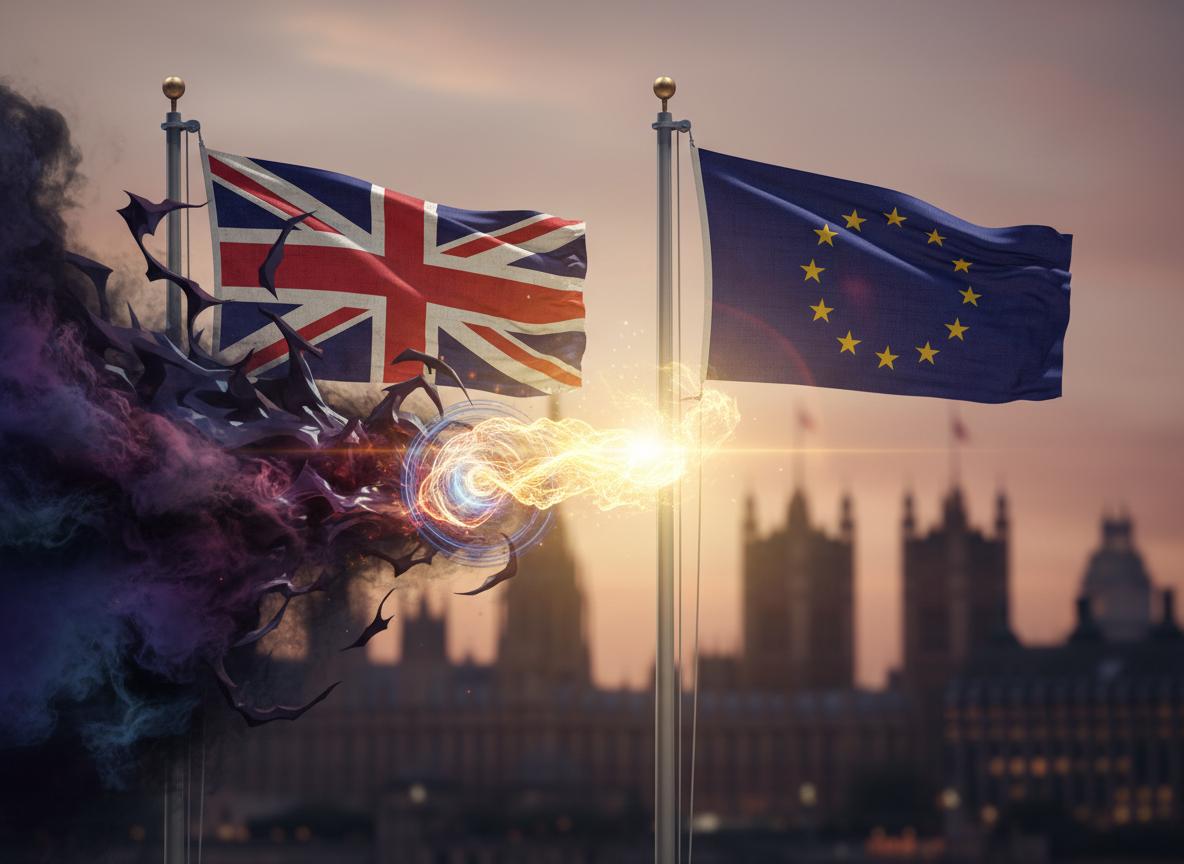
Starmer Faces Backlash From Farage Over Plans to Deepen European Union Ties
Prime Minister Keir Starmer confronts fierce opposition from Reform UK leader Nigel Farage following revelations about new negotiations with the European Union, the row centers on proposals to align British standards with continental rules in exchange for reduced trade friction.
Approaching Decade of Division Sets Stage
The political landscape remains deeply fractured nearly ten years after the 2016 referendum transformed the nation. Keir Starmer assumed office in July 2024 with a mandate to stabilize the economy, he has consistently argued that the previous administration left behind a botched withdrawal agreement based on unfulfilled pledges. Nigel Farage solidified his position as a parliamentary disruptor after winning his seat in Clacton, he continues to pressure the government to maintain a strict distance from European institutions. This ideological clash intensifies as the Labour government seeks to repair diplomatic relations that frayed during the initial withdrawal process.
Government Pursues Regulatory Alignment Deal
Reports indicate that Downing Street is finalizing a comprehensive agreement designed to ease the movement of goods across the channel. The deal reportedly grants European fishing vessels continued access to British waters until 2038, it also requires the UK to mirror European safety standards for food and agricultural products. Sources suggest this arrangement could reintroduce oversight by the European Court of Justice for specific sectors, a move that opponents describe as a surrender of sovereignty.
Nigel Farage condemned the strategy as a betrayal of the electorate, he stated that aligning with foreign rules effectively places Brussels in charge of British commerce. European negotiators have simultaneously insisted on a safeguard mechanism known informally as the Farage clause, this provision would force the UK to pay compensation if a future Eurosceptic government attempts to tear up these sanitary and phytosanitary agreements. Government officials argue the reset is a win-win scenario that resolves practical trading barriers without formally rejoining the single market or customs union.
Industries Brace for New Trade Rules
The proposed changes promise to alter the operational landscape for thousands of British companies engaged in international trade. Exporters generally welcome the prospect of reduced red tape and smoother border checks, however detractors warn that strict alignment limits the freedom to deregulate or pursue divergent policies. The diplomatic insistence on financial penalties for non-compliance reveals deep skepticism in Brussels regarding the longevity of British political commitments, this uncertainty complicates long-term planning for investors who fear policy reversals if the political pendulum swings again.
Ministers maintain that these steps are essential for economic growth rather than a reversal of the referendum result. The administration faces a difficult path ahead as it attempts to satisfy business needs while managing political volatility at home.