Major Infrastructure Push Transforms Auckland with Six Key Construction Milestones in 2026
Auckland prepares for a definitive year as six massive infrastructure developments reach completion or critical phases in 2026. The city faces a dramatic reshaping of its transport and housing sectors, officials aim to solve decades of congestion issues while boosting economic growth through these multi-billion dollar investments.
Decades of Population Growth Force Major Infrastructure Overhaul
Rapid population increases have outpaced development for years, this created severe traffic and housing shortages across the region. Planners previously shelved ambitious ideas like the 1920s rail tunnels due to costs, yet modern demands now make action unavoidable. The current boom follows the 2014 rail electrification, this shift marks a necessary response to critical infrastructure deficits that threatened the city’s economic productivity.
Transit and Housing Projects Reach Critical Delivery Phases
The centerpiece of this surge is the $5.5 billion City Rail Link, it opens to passengers this year after long construction timelines. This 3.45 kilometer underground loop connects Waitematā Station with a redeveloped Maungawhau hub, it promises to double rail capacity for commuters. Two new southern railway stations at Drury and Paerata also begin service, they will support expanding communities in the south.
Commercial and Residential Growth
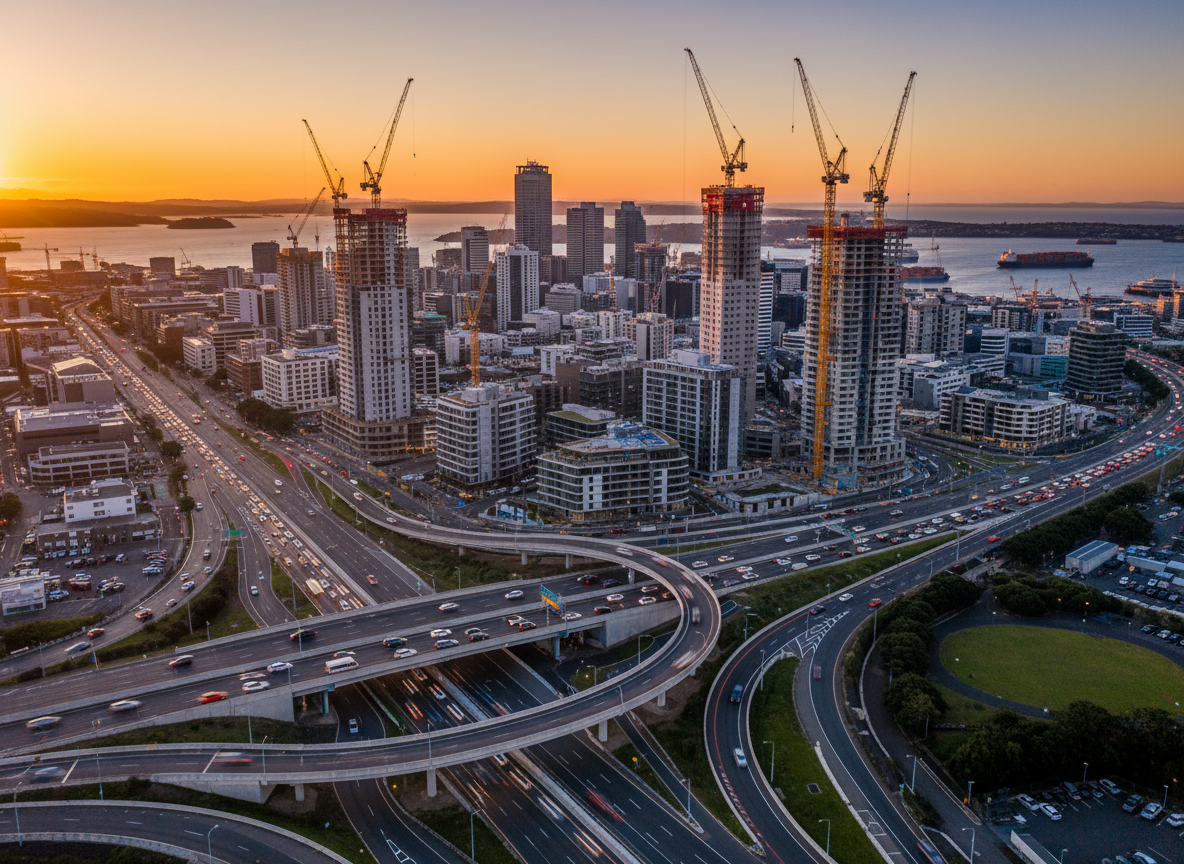
Crews will break ground on the massive Beachlands South development, this includes new schools and housing on 37 hectares. Meanwhile, the airport continues its $800 million terminal upgrade, vertical construction also starts on the $650 million office tower at 35 Graham Street to revitalize the central business district.
Commuters and Businesses to Gain from Enhanced Connectivity
These investments aim to slash travel times for thousands of daily commuters, the new rail link eases bottlenecks that previously crippled the network. Business leaders expect improved access to workers and customers, this boosts productivity in the city center. Environmental advocates note the shift toward public transit will lower carbon emissions, it offers a sustainable alternative to private vehicle reliance.
Planners look beyond these immediate wins toward the next challenge, a decision on the second Waitematā Harbour crossing is expected by mid year to ensure future resilience.