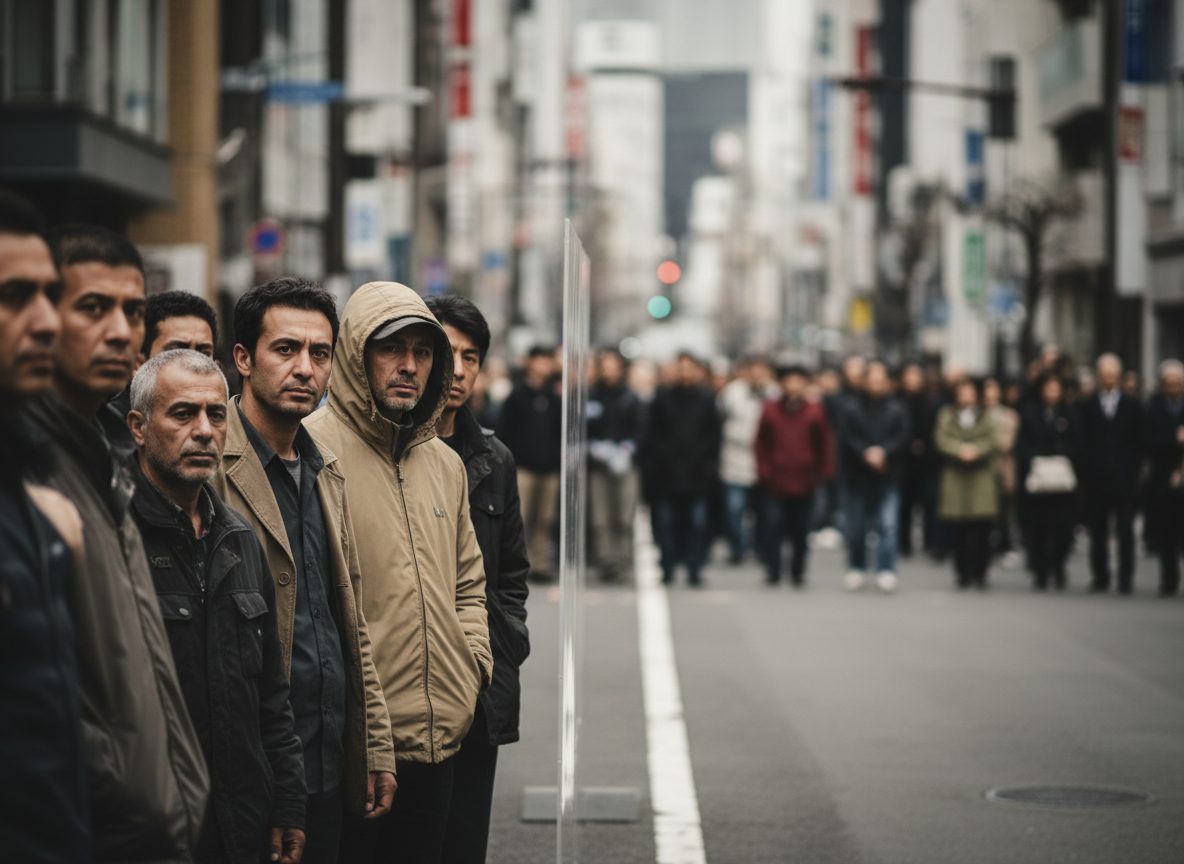
Demographic Anxiety Fuels Hostility Toward Kurdish Asylum Seekers in Kawaguchi Region
Japan faces escalating social friction as an aging populace increasingly targets Kurdish immigrants in Saitama Prefecture, this hostility highlights the nation's struggle to balance economic reliance on foreign labor with deep-seated cultural insularity. Viral misinformation and restrictive legal frameworks have transformed local grievances into a broader crisis regarding human rights and national identity.
Decades of Strict Refugee Policies Clash With Labor Shortages
Japan has historically prioritized ethnic homogeneity despite being a signatory to international refugee conventions, this stance has resulted in one of the lowest refugee recognition rates among developed nations. The country is simultaneously grappling with a severe demographic crisis that necessitates foreign labor to sustain its economy, yet the existing legal framework traps many arrivals in a state of permanent limbo. This structural contradiction has existed for years without resolution, it has recently reached a boiling point in cities like Kawaguchi where concentrated immigrant populations face heightened scrutiny from anxious local residents. Recent data indicates that foreign residents now comprise roughly 3.2 percent of the total population, a reality that challenges the traditional narrative of a mono-ethnic society.
Legislative Changes and Viral Agitation Spark New Wave of Exclusion
Tensions escalated significantly following a brawl at a hospital in August 2023, this isolated incident was weaponized by right-wing groups and online agitators to paint the Kurdish community as a security threat. Reports indicate that a Turkish national impersonating a Kurd on social media platform X deliberately inflamed public opinion with provocative content, this led to demonstrations and hate speech targeting the roughly 3,000 Kurds residing in the country. The situation worsened in June 2024 when revisions to the Immigration Control and Refugee Recognition Act took effect, these changes allow authorities to deport individuals after two failed asylum applications without requiring a review of new evidence.
Government data reveals that Turkish nationals constituted a quarter of multiple refugee claimants as of March 2024, many are now at risk of immediate expulsion despite fearing persecution in their home country. The intersection of stricter enforcement and social unrest has emboldened xenophobic movements, they often label long-term residents as fake refugees or criminals. Local authorities in Saitama find themselves caught between enforcing national statutes and managing community relations, meanwhile the central government continues to tighten entry requirements under the guise of maintaining public order.
Immigrant Families Struggle Amidst Rising Discrimination and Legal Uncertainty
The Kurdish community now faces increased discrimination in daily life, families who have lived in Japan for decades struggle to access education and stable employment due to their provisional status. Local businesses and construction firms that rely on this labor force are navigating a complex legal landscape, meanwhile Japanese residents in affected neighborhoods express growing unease over perceived cultural clashes regarding noise and waste disposal rules. The lack of comprehensive integration support threatens to drive a permanent wedge between these groups, this creates an environment where vulnerable populations are scapegoated for broader societal anxieties.
Experts warn that failing to address these human rights violations could damage Japan's international reputation, officials must urgently balance the economic need for workers with the social necessity of inclusive policy reform.